What fire extinguishers have been banned?
A building’s firefighting equipment is an essential part of its fire safety strategy. This includes fire extinguishers, but not all types remain compliant. After the Grenfell tragedy in London, new legislation, such as The Fire Safety (England) Regulations 2025 and The Building Safety Act 2022, has come into force.
One of the biggest updates is the 2025 ban on certain fire extinguishers, but what does this mean for businesses, landlords and Responsible Persons under fire safety laws?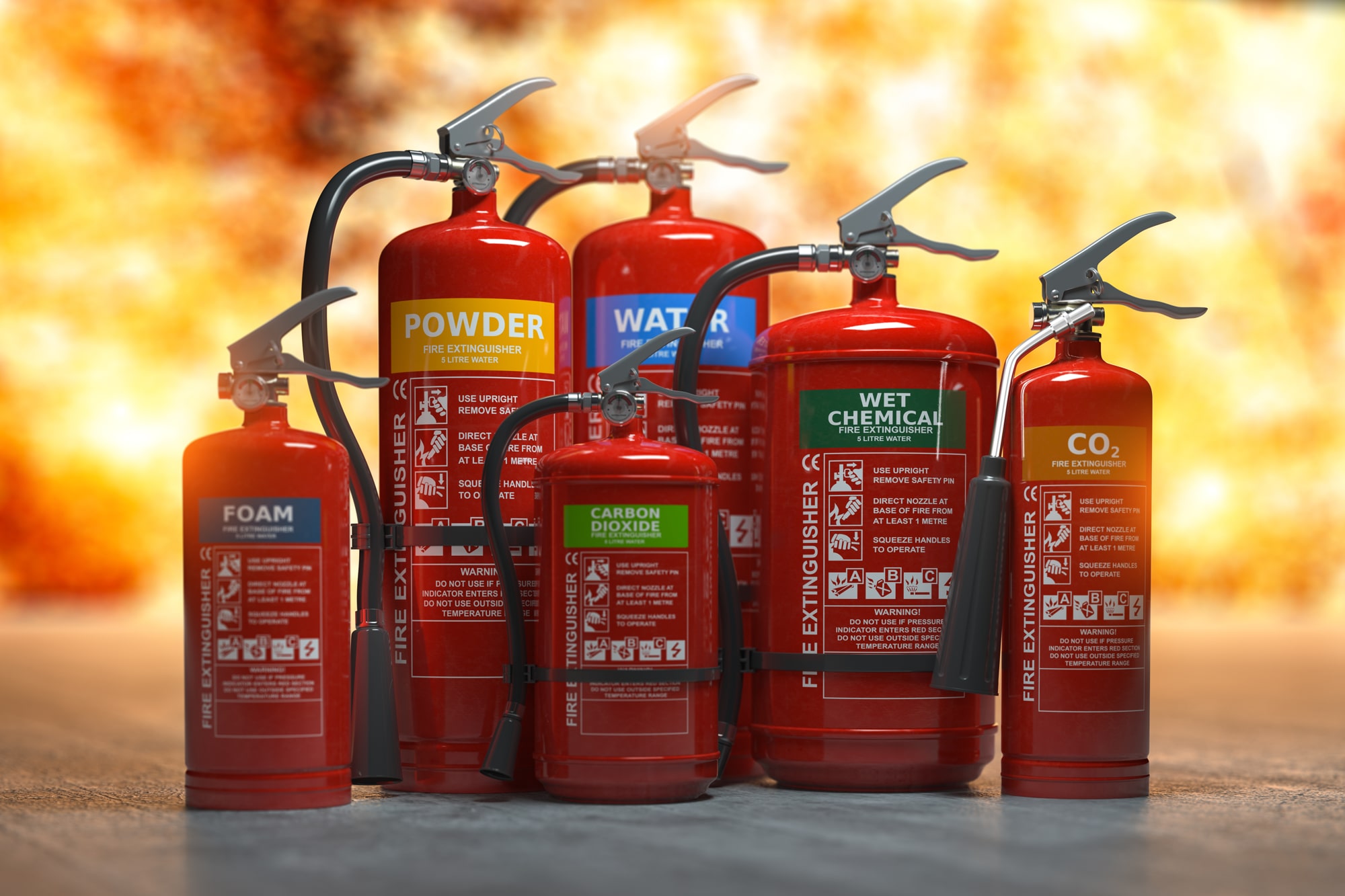
What fire extinguishers have been banned in 2025?
As of 4th July 2025, the UK has banned the use, sale and installation of fire extinguishers containing PFAS (per- and polyfluoroalkyl substances), especially those with Aqueous Film Forming Foam (AFFF) and PFOA (perfluorooctanoic acid). They’re now classed as harmful to our health and the environment.
The ban covers AFFF foam extinguishers with PFAS, new sales and installations, and servicing or refilling of the units. If you’re unsure what types of extinguishers your business or building has, you must ask a qualified fire risk assessor to review them for you.
Why can’t we use AFFF extinguishers anymore?
AFFF extinguishers are usually used for Class A (solids) and Class B fires (flammable liquids). However, as they contain PFAS, these ‘forever chemicals’ don’t break down in the environment and may cause health issues.
Research into PFAS exposure has shown possible links to certain cancers, cardiovascular issues, liver damage and hormonal disruptions. Their long-term persistence in the environment could also cause soil and groundwater contamination issues.
What should you do if your building has AFFF extinguishers?
If your premises still use AFFF foam extinguishers, using or keeping them on site could be considered non-compliant.
You should ensure they are not refilled or serviced, considering immediate replacement with PFAS-free alternatives or other compliant extinguishers, like water mist, CO2 and dry powder options, depending on your risk profile. Ask a fire risk assessor to assess your building. They can recommend suitable replacements and ensure remaining extinguishers are correctly installed based on your individual fire risks.
Fire extinguisher disposal should be conducted safely by a licensed waste contractor. You should also update your most recent fire risk assessment to reflect the changes made.
How often should fire extinguishers be checked?
Yes, fire safety laws cover the requirement that all extinguishers are visually inspected on a monthly basis, annually inspected by a qualified technician, and pressure tested or replaced every 5 to 10 years, depending on the type installed.
Fire extinguisher inspections include checks of the weight, nozzle and hose, safety seals and documentation. MD Fire will also look at the type of fire extinguishers you have for your risk level and recommend changes when they are needed.
Professional fire extinguisher assessments in London and Surrey – get a free quote
Want to know if fire extinguishers are compliant? Hire our fire risk assessors in the South East? We cover West London, East London, Bedfordshire and beyond.
Get a free quote now by contacting MD Fire.