Fire Door Inspections – What to Expect
When considering the most important parts of a fire risk assessment, certain doors within your property need checking. These crucial fire door inspections look at the safety of the building, including how quickly fire and smoke could spread throughout key areas like escape routes.
Here’s why fire door assessments are so important and what to expect during the checks.
What is a fire door?
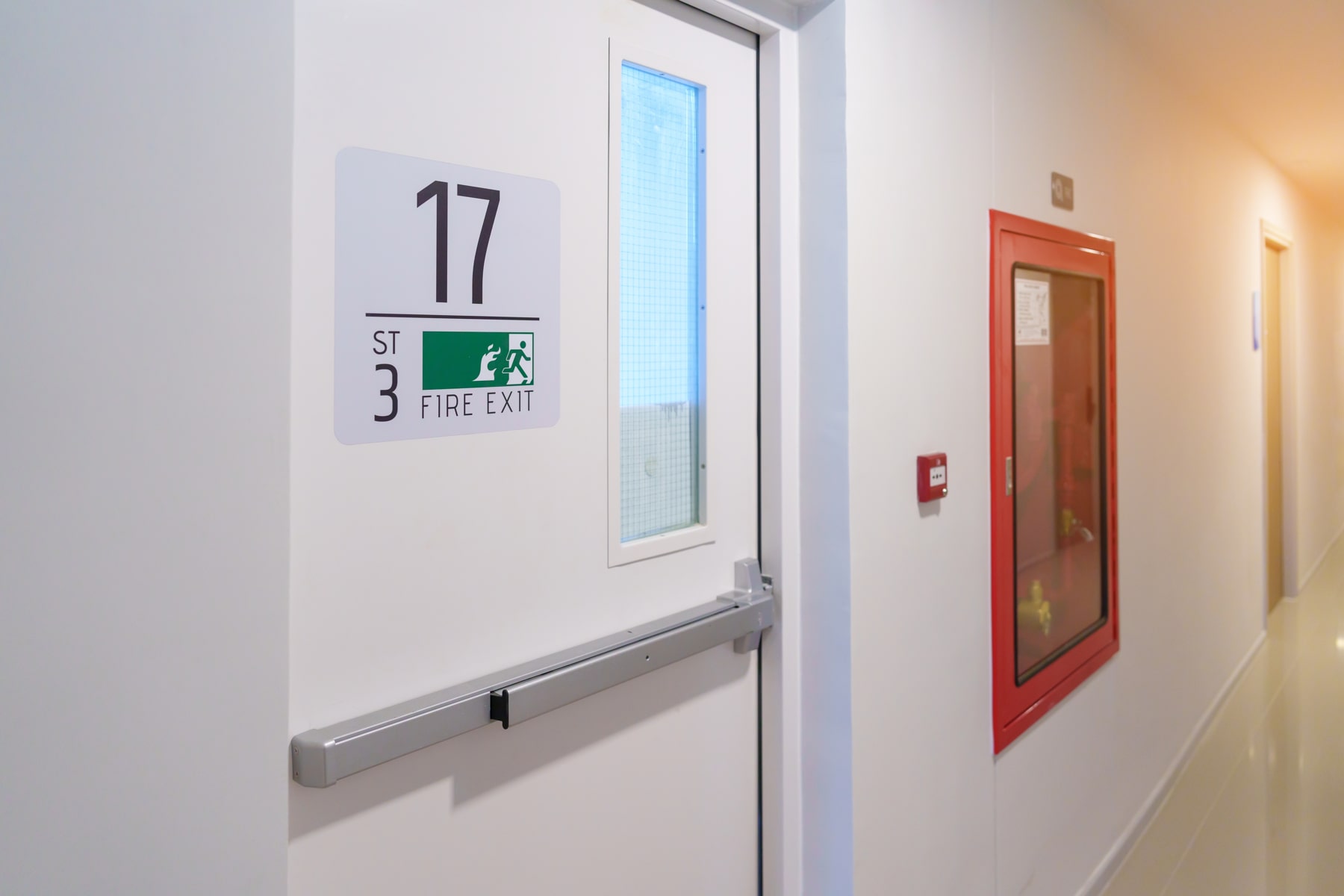
Fire doors form an essential aspect of the building’s passive fire protection. They’re specially designed and built to resist the spread of fire and smoke for at least 30 minutes (but hopefully much longer).
Fire doors are typically made from materials such as timber, steel and glass, equipped with components such as fire-rated hinges with high melting points, smoke seals and self-closing mechanisms. The aim is for the fire door to compartmentalise a building if a fire breaks out to provide occupants with safe evacuation routes while limiting property damage.
In apartment blocks and flats, fire doors are usually entrance doors, doors to stairwells and lobbies, doors sub-dividing corridors, and doors to plant rooms.
Are fire door inspections a legal requirement?
The Fire Safety (England) Regulations 2022 outline new duties for building managers or owners under the Fire Safety Order. This requires ‘Responsible Persons’ to arrange regular fire door inspections at their property. Non-compliance with these rules could result in severe fires or prison sentences.
The aim of fire checks is to ensure the existing door standard is maintained, ensuring the integrity of fire escape routes. This protects occupants while making sure fire doors will function as expected in the event of a fire.
How are fire doors checked?
During fire door inspections, your assessor will check self-closing devices work and are in a good state of repair. Each door will be thoroughly examined to determine its condition and function, looking for obvious signs of damage like warping and cracks.
The actual fire door frame will also be inspected, making sure it’s attached to the wall with no signs of damage. Door leaves shouldn’t have any defects, closing properly within the frame. Smoke seals and hinges have to remain intact and securely fixed. Gaps around the door need to stay within recommended limits.
Fire door signage should also be present and clear.
What happens if a fire door is faulty?
If your fire risk assessor identifies a fault with your fire doors, immediate steps must be taken to rectify the issues.
Sometimes, only minor repairs are needed, such as replacing seals, adjusting hinges or replacing fire door signage. Major alterations or new fire doors are required if there’s significant damage, such as compromised frames or warping.
All assessments and repairs must be well-documented, including details of any faults identified, corrective action and the next inspection date. A fire door re-inspection should be scheduled after the repairs to ensure compliance.
Book a new fire door risk assessment now
MD Fire provides trained fire risk assessors in the South East, including Home Counties like Kent and Sussex. For more information, call us on 0208 355 8820.